
Not every wisdom tooth causes trouble — but the ones that do usually announce it clearly: recurring pain at the back of the jaw, swelling, or a tight, difficult-to-clean gum flap that keeps getting infected.
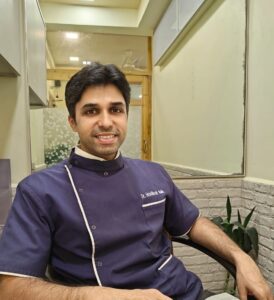
At PlanDental in Mahim West, wisdom tooth removal is carried out by Dr. Hrishikesh Naik and Dr. Nisha Naik, both MDS in Prosthodontics and Implantology. An X-ray decides whether a wisdom tooth needs a simple or surgical approach before anything is scheduled. Read more about the clinic before you book.
Patients usually book this for: recurring pain at the back of the jaw swelling or infection around a partially erupted tooth crowding pressure on nearby teeth a cyst found on X-ray difficulty cleaning around the tooth
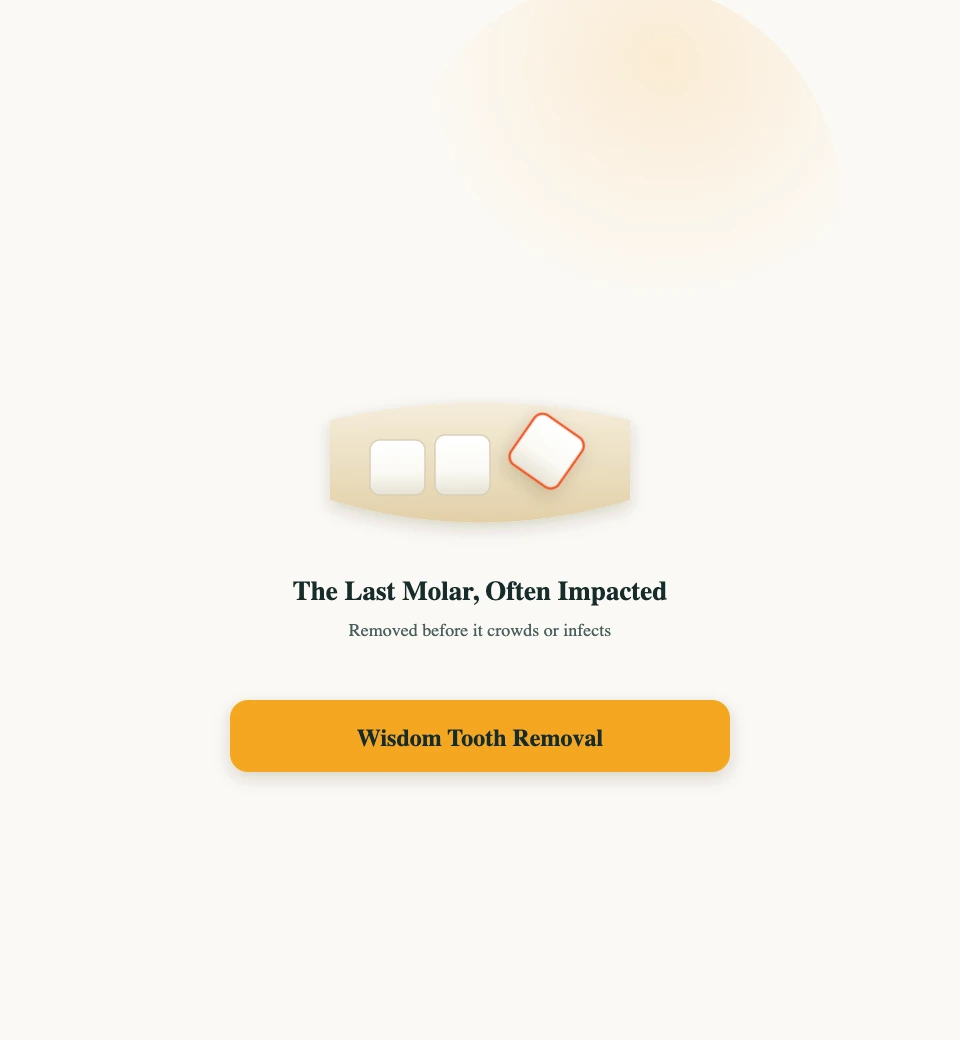
Wisdom tooth removal at PlanDental in Mahim, Mumbai removes a third molar that's causing pain, recurring infection, crowding, or is impacted against a neighbouring tooth. Not every wisdom tooth needs removing — a fully erupted, symptom-free one may simply be monitored. An X-ray decides whether a specific tooth can be removed with a simple extraction or needs the surgical approach, which most impacted wisdom teeth do.
Wisdom teeth (third molars) are the last teeth to develop, usually emerging in the late teens or twenties, by which point the jaw often doesn't have enough remaining space for them. This causes impaction — the tooth grows in at an angle, stays partly trapped under gum or bone, or pushes against the tooth next to it.
Removal is about addressing that specific problem, not a routine step everyone needs. A wisdom tooth that erupts fully, sits in a normal position, and can be cleaned properly may never need to come out at all.
An X-ray and exam confirm which column below applies to a specific tooth.
Because wisdom teeth erupt last, into whatever space is left in the jaw, they're far more likely than other teeth to come in at an angle, stay partly covered by bone or gum, or press against the tooth next to them. This is exactly the situation a surgical extraction is designed for — a simple elevator-and-forceps technique doesn't have a path to work with on a tooth that's still partly buried.
Lower wisdom teeth in particular sit close to a major nerve running through the jaw, which is why imaging before removal matters more here than for most other extractions.
The right approach depends entirely on the tooth's position on X-ray.
For a wisdom tooth that's fully erupted and accessible.
For an impacted or partly buried wisdom tooth.
Regular X-rays to watch a symptom-free wisdom tooth over time.
Confirms the tooth's angle, depth, and proximity to nerves or the neighbouring molar.
The tooth and surrounding tissue are fully numbed.
The approach follows what the X-ray showed — a direct pull, or an incision with sectioning where needed.
Surgical cases are closed with stitches; simple cases usually aren't.
You leave with specific instructions on swelling, diet, and jaw movement for the following days.
Wisdom tooth removal cost in Mumbai depends heavily on whether the tooth needs a simple or surgical approach, and how deeply impacted it is. PlanDental doesn't publish a fixed figure here, since an X-ray is needed before an accurate estimate is possible — call or WhatsApp and the clinic will talk you through it.
This section describes what affects cost, not a quotation. Actual cost is confirmed only after an exam and X-ray.
Sometimes that's genuinely the case, and sometimes only the symptomatic ones do. Send your X-ray or details on WhatsApp for a straight opinion.
Swelling and limited jaw opening are common; ice packs, rest, and avoiding rinsing or straws help protect healing.
Soft food continues; sutures, if placed, are checked and often removed around this point.
Swelling and jaw stiffness fully settle; normal eating and brushing resume.
Bone healing in the socket continues beneath the surface for longer than the visible healing.
A fully erupted, symptom-free tooth in a functional position and easy to clean — this is usually monitored, not removed.
Very close proximity to a major nerve on imaging, where extra caution or referral may be discussed first.
Active infection needing antibiotics to settle before extraction can safely proceed.
Uncontrolled bleeding disorders or medications affecting healing that haven't been medically cleared.
After full numbing, you'll feel pressure and vibration, not sharp pain, throughout. Depending on the tooth's position, the appointment may be quick (a fully erupted tooth) or closer to an hour (an impacted one needing the surgical approach). No sedation is used routinely at this clinic — ask specifically if that matters to you. You'll leave with clear aftercare instructions and, for surgical cases, information on a suture check.
Each wisdom tooth is evaluated on its own X-ray, not treated as a set.
Surgical skill built for implant placement applies directly to impacted extractions.
Step-free walk-in access, Guru Nanak Road, Mahim West — no stairs.
Same Guru Nanak Road address, next to Citylight Cinema, for over a decade.
Not necessarily — each tooth is assessed on its own X-ray. Some patients need one removed, others need more, based on impaction and symptoms, not a blanket rule.
The procedure itself is done under local anaesthesia and isn't painful. Swelling and soreness afterward, more than after a routine extraction, are managed with the aftercare instructions given at the visit.
Dry socket is loss of the protective blood clot from the socket, causing delayed pain. It's notably more common after impacted wisdom tooth extractions than routine ones, and more common in smokers.
No — this is a common misconception. Removing wisdom teeth doesn't reshape the jaw or face for a routine extraction.
There's no fixed age requirement — it depends on when the tooth causes problems or is identified as likely to. Many cases are addressed in the late teens to twenties, but this varies by individual.
Initial healing takes about one to two weeks for simple cases, sometimes longer for surgically removed, deeply impacted teeth.
Sometimes, yes, if it isn't damaging a neighbouring tooth or showing signs of infection or a cyst — this is monitored with periodic X-rays rather than removed by default.
Most patients take a day or two off, more for surgically removed impacted teeth, and avoid strenuous activity for the first 24 to 48 hours.
Call or WhatsApp PlanDental to check today's availability, ask a question, or send an X-ray for a personalised estimate — no forms to fill.
General background reading on the clinical claims made on this page (not clinic-specific research):
Disclaimer: Information provided on this page is for educational purposes only. Individual treatment plans and outcomes vary based on clinical evaluation by a qualified dentist.