

Gum grafting adds tissue to cover a tooth root exposed by gum recession — the opposite direction of gum contouring, which removes excess tissue. PlanDental diagnoses recession, corrects contributing causes, and coordinates referral for the grafting surgery itself.
At PlanDental in Mahim West, recession is assessed by Dr. Hrishikesh Naik and Dr. Nisha Naik, both MDS in Prosthodontics and Implantology. Read more about the clinic before you book.
Patients usually book this for: visible root exposure sensitivity from receded gums a tooth that looks longer than others recession noticed at a check-up wanting to know if grafting is needed
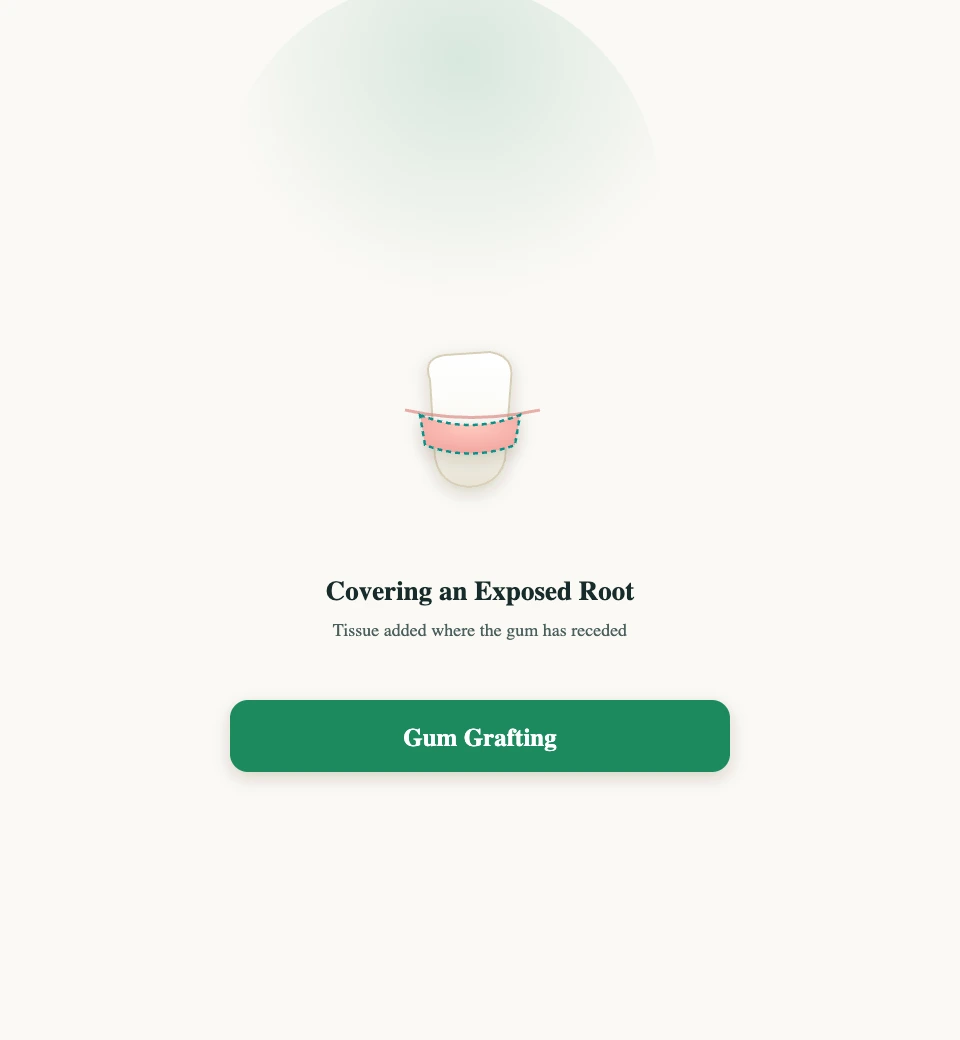
Gum grafting covers an exposed tooth root by adding tissue, either from elsewhere in the mouth or from a graft material — the reverse of what gum contouring does. At PlanDental in Mahim, Mumbai, the visit assesses whether recession needs grafting or can be monitored, corrects any ongoing cause such as brushing technique, and — where grafting surgery itself is appropriate — coordinates referral to a periodontist, since this specific surgery is specialist territory.
Gum recession happens when the gum margin pulls back from a tooth, exposing part of the root that's normally covered. Common contributing causes include aggressive brushing, untreated gum disease, teeth grinding, orthodontic tooth movement, thin gum tissue by nature, and tobacco or paan use. Once tissue has receded, it doesn't grow back on its own — grafting is the procedure that restores coverage where that matters.
This is the opposite of gum contouring, which removes excess tissue covering too much of the tooth. Recession is too little tissue; a gummy smile from tissue overgrowth is too much — the treatments run in opposite directions.
Gum tissue, unlike some other tissues in the body, doesn't regenerate to its original position once it has receded past a certain point. The margin that recedes represents an actual loss of tissue volume at that site, not just a temporary retraction — which is why addressing the cause stops further recession but doesn't restore what's already been lost. Restoring coverage requires adding tissue back, which is what grafting does.
Assessing recession, correcting brushing technique or a night guard for grinding, and tracking stable cases.
Adds tissue to cover exposed root, performed by a periodontist.
Can ease sensitivity from exposed roots but don't restore tissue coverage.
Extent of root exposure and its likely cause are examined and measured.
Brushing technique, a night guard for grinding, or other contributing factors are addressed directly.
Stable, mild cases are tracked at routine check-ups; progressing or symptomatic cases are discussed for referral.
Where grafting surgery is appropriate, a referral is coordinated to a specialist for the procedure itself.
Once healed, ongoing care and monitoring continue at PlanDental.
Gum grafting cost in Mumbai depends on how many tooth sites are involved, the graft technique used, and the specialist performing the surgery. Since this procedure is referred to a periodontist, PlanDental will help you understand the diagnosis first — cost specifics for the surgery itself are confirmed with the specialist.
This section describes what affects cost, not a quotation. Actual cost for the surgery is confirmed by the treating specialist.
Not every case of recession needs surgery right away — some are safely monitored. Send your details on WhatsApp for a straight opinion.
Some swelling and tenderness at both the graft site and, if tissue was taken from elsewhere, the donor area.
A soft diet and gentle care around the area support initial healing.
Tissue integrates with the graft site as healing progresses.
PlanDental resumes routine maintenance and monitoring once healing is complete.
This is general information about grafting recovery — your treating specialist will give you the specific aftercare instructions for your procedure.
Active gum disease is treated first — grafting over untreated inflammation doesn't hold up well.
An uncorrected cause, such as ongoing aggressive brushing or untreated grinding, can cause recession to recur even after a successful graft.
Very mild, non-progressing recession may not need surgery at all — monitoring is sometimes the more appropriate choice.
The visit at PlanDental focuses on understanding your recession — how much, where, and why it's happening — and correcting anything actively contributing to it. If grafting surgery is the right next step, you'll leave with a clear explanation of why and a referral to a periodontist, rather than a vague recommendation. This is a diagnostic and planning visit, not the surgery itself.
Grafting surgery is directed to a periodontist rather than attempted beyond scope.
Brushing technique or grinding is corrected before or alongside any referral.
Step-free walk-in access, Guru Nanak Road, Mahim West — no stairs.
Same Guru Nanak Road address, next to Citylight Cinema, for over a decade.
No — once gum tissue has receded, it doesn't return to its original position without a graft. Correcting the cause prevents further recession but doesn't restore what's already been lost.
The surgery is performed under local anaesthesia by the treating specialist. Mild discomfort during healing is normal and manageable, as with most minor oral surgery.
Not always — stable, symptom-free recession is sometimes monitored rather than treated immediately. This is assessed case by case.
PlanDental assesses recession, corrects contributing causes, and coordinates referral to a periodontist for the grafting surgery itself, since this is a specialised soft-tissue procedure.
Gentle brushing technique, managing teeth grinding, and treating gum disease early all reduce the risk of recession progressing further.
Outcomes vary by technique, site, and individual healing, and are best discussed directly with the specialist performing your procedure.
Grafting adds tissue to cover an exposed root from recession. Contouring removes excess tissue covering too much of the tooth. They address opposite problems.
Call or WhatsApp PlanDental to check today's availability or ask a question — no forms to fill.
Disclaimer: Information provided on this page is for educational purposes only. Individual treatment plans and outcomes vary based on clinical evaluation by a qualified dentist or referred specialist.