

The first orthodontic evaluation is recommended around age 7 — while some baby teeth are still present — because that's when jaw growth and bite development can be assessed early enough to catch problems while they're simple to guide.
At PlanDental in Mahim West, this evaluation is done by Dr. Hrishikesh Naik and Dr. Nisha Naik, both MDS in Prosthodontics and Implantology. Where bracket-based orthodontic treatment is the right next step, it's coordinated with an orthodontist. Read more about the clinic before you book.
Parents usually book this for: child turning 7, first ortho check visibly crowded or crooked teeth a noticeably narrow upper jaw thumb-sucking past early childhood baby teeth falling out unevenly
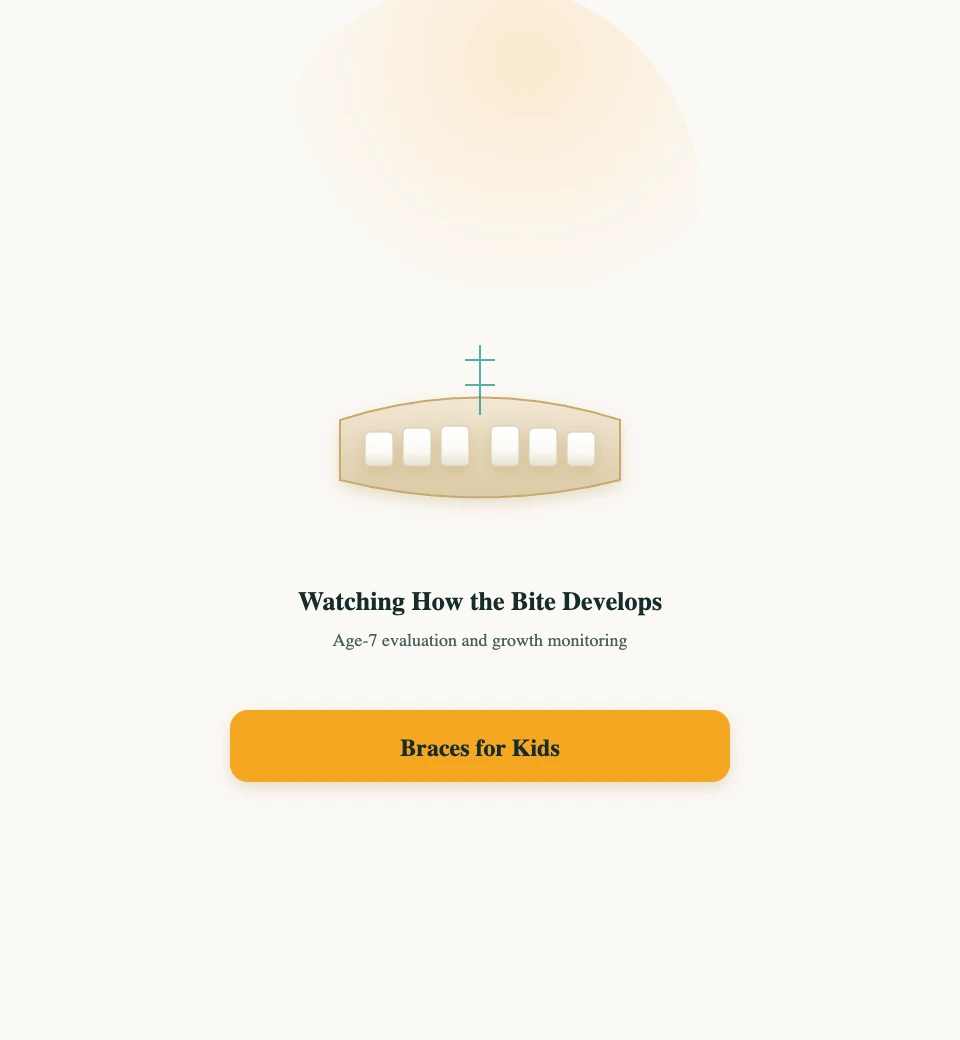
Braces for kids at PlanDental in Mahim, Mumbai starts with an age-7 evaluation — a widely recommended screening age, since a mix of baby and permanent teeth by then lets a dentist assess bite and jaw development with real accuracy. Most children at this age are simply monitored with periodic rechecks rather than started on treatment immediately. Where early (interceptive) treatment or full bracket-based treatment is the right next step, PlanDental coordinates with an orthodontist for the appliance and bracket work itself.
By around age 7, most children have a mix of baby and permanent teeth — enough for a dentist to see how the jaw is growing and how the bite is developing, even though most of the mouth is still baby teeth. This is different from waiting until all the permanent teeth have erupted, since some jaw and bite problems are far easier to guide while growth is still happening than to correct afterward.
"Early" or interceptive orthodontics refers to treatment started during this mixed-dentition stage, aimed at guiding jaw growth or creating space for erupting permanent teeth — as distinct from comprehensive orthodontic treatment (full braces or aligners), which is usually a separate, later stage once more permanent teeth are in place.
Jaw growth is still active in a 7-year-old, which is exactly what makes early evaluation useful — a narrow jaw or emerging crowding pattern can sometimes be guided using that remaining growth, in ways that aren't possible once the jaw has largely finished developing. According to the American Association of Orthodontists, this is the basis for the age-7 screening recommendation: permanent molars and incisors have usually arrived by then, revealing how the jaw is developing, even while treatment itself is often deferred to a later, more appropriate stage.
Bite and jaw growth assessment, with periodic rechecks if no treatment is needed yet.
Guides jaw growth or creates space during the mixed-dentition stage.
Full bracket-based treatment once more permanent teeth are in place.
The dentist looks at how the upper and lower teeth meet and how the jaw appears to be developing.
Baby and permanent teeth positions are reviewed for crowding, spacing, or early loss.
Thumb-sucking or other habits that can affect bite development are discussed if relevant.
Most children are simply scheduled for a future recheck; where treatment is appropriate, referral to an orthodontist is coordinated.
The age-7 evaluation itself is a standard dental consultation visit. If interceptive or comprehensive treatment is recommended, cost for the appliance or bracket work itself is confirmed with the coordinating orthodontist. Call or WhatsApp PlanDental to check evaluation visit details.
This section describes what affects cost, not a quotation. Actual cost for any treatment is confirmed with the treating orthodontist.
Most children evaluated at age 7 are simply monitored, not started on treatment immediately. Send your child's exam notes on WhatsApp for a straight opinion.
You leave with a clear result — monitor and recheck, or referral for treatment.
A recheck is scheduled, typically alongside routine dental check-ups.
The orthodontist takes over the treatment plan and appliance fitting.
PlanDental continues routine dental care alongside any orthodontic treatment.
Fitting or adjusting braces, aligners, or other orthodontic appliances is coordinated with an orthodontist, not performed at this evaluation.
Complex jaw growth concerns needing imaging beyond a standard exam may need specialist assessment.
Active decay or gum issues are addressed as routine dental care alongside, not as part of, the orthodontic evaluation.
It's a straightforward, non-invasive visit — a look at the teeth and bite, a few simple questions about habits like thumb-sucking, and sometimes an X-ray if the dentist wants a clearer view of how permanent teeth are positioned underneath. There's no discomfort involved, and most children find it no different from a routine dental check-up.
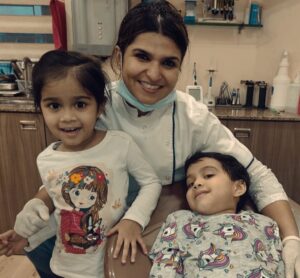
Screening and monitoring here; bracket work coordinated with an orthodontist.
Most 7-year-olds are simply monitored — that's stated plainly, not upsold.
Step-free walk-in access, Guru Nanak Road, Mahim West — no stairs.
Same Guru Nanak Road address, next to Citylight Cinema, for over a decade.
By around age 7, most children have a mix of baby and permanent teeth, letting a dentist assess bite and jaw development with real accuracy — even though most treatment, if needed, is still deferred to a later stage.
Usually not — most children evaluated at this age are simply monitored with periodic rechecks, and don't start active treatment until several years later, if at all.
Interceptive treatment happens earlier, during the mixed-dentition stage, and focuses on guiding jaw growth or creating space. Comprehensive braces treatment is typically a separate, later stage once more permanent teeth are in place.
PlanDental provides the age-7 screening and ongoing monitoring. Where bracket-based orthodontic treatment is the right next step, it's coordinated with an orthodontist for the appliance work itself.
Prolonged thumb- or finger-sucking past early childhood can affect bite development, which is one of the things checked at the evaluation.
No — it's a straightforward, non-invasive visit, similar to a routine dental check-up.
1. American Association of Orthodontists — recommendation on the first orthodontic evaluation at age 7. aaoinfo.org
Call or WhatsApp PlanDental to check today's availability or ask a question — no forms to fill.
Disclaimer: Information provided on this page is for educational purposes only. Individual treatment plans and outcomes vary based on clinical evaluation by a qualified dentist or orthodontist.