

A tooth broken off at the gum line, buried under bone, or held by roots that curve where a simple pull can't follow needs a different approach — a small incision, and sometimes sectioning the tooth, to remove it safely.
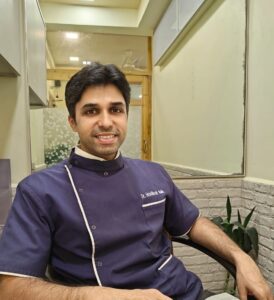
At PlanDental in Mahim West, surgical extractions are carried out by Dr. Hrishikesh Naik and Dr. Nisha Naik, both MDS in Prosthodontics and Implantology. The same bone-handling skill used to place dental implants applies directly to removing a tooth surgically. Read more about the clinic before you book.
Patients usually need this for: a tooth broken at the gum line an impacted tooth, including wisdom teeth curved or fused tooth roots seen on X-ray a failed attempt at a simple extraction a tooth fractured below the gum from trauma
Surgical tooth extraction at PlanDental in Mahim, Mumbai removes a tooth that can't be taken out with a simple elevator-and-forceps technique — because it's broken at the gum line, impacted below the surface, or held by curved roots. It involves a small gum incision, sometimes minor bone removal or sectioning the tooth into pieces, then sutures. It's the same technique most commonly needed for wisdom tooth removal, but applies to any tooth in this situation, not just third molars.
A simple extraction removes a fully visible tooth with an elevator and forceps, no incision needed. A surgical extraction is required when that approach won't work — the tooth is broken below the gum, still partly covered by bone, or its roots curve or fuse in a way a simple pull can't release. A small incision in the gum, and sometimes removing a little bone or splitting the tooth into sections, allows it to come out in pieces rather than forcing it whole.
This isn't a more aggressive version of the same procedure — it's the correct technique for a tooth that a simple extraction genuinely can't safely handle.
An X-ray, sometimes a more detailed scan, confirms which column below applies to a specific tooth.
An elevator and forceps work by levering a tooth along the natural curve of its root and widening the ligament space around it. When a root curves sharply, splits into a wide fork, or fuses with a neighbouring root, that leverage path doesn't exist — pulling harder risks fracturing the root or the surrounding bone rather than removing the tooth cleanly. The same problem occurs when a tooth is impacted: bone or gum tissue physically blocks the path a simple extraction needs.
A small incision and, where needed, sectioning the tooth solves this by removing the obstacle or by taking the tooth out in smaller pieces along a path that does work.
How a tooth is removed depends on what the X-ray shows. Here's how the approaches compare.
Small incision, sometimes bone removal or sectioning, then sutures.
No incision, for a fully visible, straightforward tooth.
For unusually complex cases beyond routine surgical extraction.
Confirms root shape, bone coverage, and how the tooth will be approached before anything is numbed.
The tooth, gum, and surrounding tissue are fully numbed.
A small flap is opened to expose the tooth or the bone covering it.
The tooth is removed whole or sectioned into pieces, whichever the anatomy calls for.
The gum is closed with stitches, and you're given clear instructions for the days ahead.
Surgical extraction cost in Mumbai depends on how complex the case is — how much bone or sectioning is involved, and which tooth it is. PlanDental doesn't publish a fixed figure here, since an X-ray is needed before an accurate estimate is possible — call or WhatsApp and the clinic will talk you through it.
This section describes what affects cost, not a quotation. Actual cost is confirmed only after an exam and X-ray.
Some cases genuinely need a surgical approach, and it's worth confirming what the X-ray actually shows. Send your X-ray or details on WhatsApp for a straight opinion.
Swelling is more noticeable than after a simple extraction; ice packs and rest help, along with avoiding rinsing or straws.
Soft food continues; sutures are checked and often removed around this point if they don't dissolve on their own.
Swelling and tenderness settle fully; the gum continues closing over the site.
Bone healing beneath the surface continues for months after the visible gum has closed.
Unusually complex root or nerve proximity seen on imaging, beyond what's routine for a general dental surgical extraction.
Uncontrolled bleeding disorders or blood-thinning medication that hasn't been medically cleared first.
Active, significant infection that needs antibiotics to settle before surgery can safely proceed.
Medical conditions affecting bone healing (such as certain bone-affecting medications) that need coordination with your physician first.
After thorough numbing, you'll feel pressure and vibration during the procedure, not sharp pain. The appointment typically runs 30 to 60 minutes depending on complexity. Sutures are placed before you leave, and you'll be given specific instructions on swelling management, diet, and when a suture check is needed. No sedation is used routinely, so you can generally arrange your own transport, though ask specifically if this matters to you.

The tooth's anatomy decides the approach, checked before treatment, not assumed.
Surgical skill built for implant placement applies directly to extractions.
Step-free walk-in access, Guru Nanak Road, Mahim West — no stairs.
Same Guru Nanak Road address, next to Citylight Cinema, for over a decade.
A surgical extraction involves a small gum incision, and sometimes bone removal or sectioning the tooth, for teeth that can't be removed with a simple elevator-and-forceps technique.
Usually, yes. The gum incision is closed with sutures that either dissolve on their own or are removed at a follow-up visit, typically around a week later.
Initial healing takes about one to two weeks, with more noticeable swelling in the first 48 hours than after a simple extraction.
This isn't confirmed as standard at this clinic — ask specifically if sedation matters to you, since routine cases here are done under local anaesthesia.
Yes — most impacted wisdom teeth need this technique. See our wisdom tooth removal page for details specific to third molars.
If a tooth fractures partway through a simple extraction, the remaining root is removed using the surgical approach rather than continuing to force it.
Both are done under local anaesthesia and aren't painful during the procedure. Surgical extractions typically involve more swelling and a longer recovery afterward.
Most patients take a day or two off for a surgical extraction, more than for a simple one, depending on how the individual case heals.
Call or WhatsApp PlanDental to check today's availability, ask a question, or send an X-ray for a personalised estimate — no forms to fill.
General background reading on the clinical claims made on this page (not clinic-specific research):
Disclaimer: Information provided on this page is for educational purposes only. Individual treatment plans and outcomes vary based on clinical evaluation by a qualified dentist.