

Root canal treatment removes infected or inflamed pulp from inside a tooth, cleans and seals the space, and saves a tooth that would otherwise need to be extracted. Clinical studies report success rates well above 90% when the tooth is restored promptly afterward.
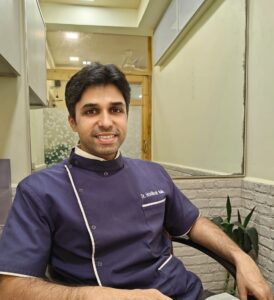
At PlanDental in Mahim West, root canal treatment is performed by Dr. Hrishikesh Naik and Dr. Nisha Naik, both MDS in Prosthodontics and Implantology. Looking for a child's baby tooth instead? See Root Canal for Children. Read more about the clinic before you book.
Patients usually book this for: lingering pain after hot or cold a tooth that hurts when biting swelling near a specific tooth a darkening tooth deep decay found at a check-up
*Per pooled outcome data cited by the American Association of Endodontists — see References below.
Root canal treatment at PlanDental in Mahim, Mumbai removes the infected or irreversibly inflamed pulp (nerve tissue) from inside a tooth, cleans and shapes the canal space, and fills it with a biocompatible material to seal it permanently. It's the standard way to save a tooth with deep decay or infection rather than extracting it — and most back teeth need a crown afterward to protect the treated tooth from fracture.
Inside every tooth is a soft tissue called pulp, containing nerves and blood vessels, running through narrow canals in the root. When decay, a crack, or trauma allows bacteria to reach this pulp, it becomes inflamed and eventually infected — this is what causes the persistent, often severe pain associated with needing a root canal. Root canal treatment removes this damaged tissue, thoroughly cleans the canal system, and seals it, stopping the infection and eliminating the source of pain.
Studies on root canal outcomes report success rates generally above 90% when strict criteria are relaxed to reflect real clinical practice, with some studies reporting rates as high as the high 90s. A long-term retrospective study found cumulative tooth survival rates of 97% at 10 years and 81% at 20 years after treatment. Research has also identified that teeth with a pre-existing infection at the root tip before treatment have a higher chance of the treatment not fully succeeding — which is one reason catching problems earlier tends to produce better outcomes.
Removes infected pulp and saves the natural tooth.
Protects a treated back tooth from fracture long-term.
The alternative when the tooth can't realistically be saved.
Confirms the extent of infection and the tooth's overall condition.
The tooth and surrounding area are numbed before any instrumentation begins.
A small opening allows the infected pulp to be removed and the canals cleaned and shaped.
The cleaned canal space is filled with a biocompatible material and sealed.
A filling or crown restores the tooth's shape and protects it going forward.
Root canal treatment cost in Mumbai depends on which tooth is treated (front teeth have fewer canals than molars) and whether a crown is needed afterward. PlanDental doesn't publish a fixed figure here — call or WhatsApp and the clinic will talk you through it after the exam.
This section describes what affects cost, not a quotation. Actual cost is confirmed only after an exam.
Many teeth assumed unsalvageable can actually be saved with root canal treatment. Send your X-ray or exam notes on WhatsApp for a straight opinion before deciding.
Mild tenderness while chewing is common as the area settles.
Discomfort typically eases; avoid chewing hard foods on that side until restored.
A crown or filling completes the treatment and protects the tooth long-term.
Routine check-ups monitor the tooth and confirm the infection has fully resolved.
A tooth fractured below the gum line usually can't be restored, regardless of the pulp's condition.
Severe, unresponsive periodontal disease affecting the same tooth may make extraction the more practical option.
A tooth with insufficient remaining structure to support a crown afterward may not be worth treating.
Skipping the final crown or filling significantly increases the risk of the tooth fracturing later.
The area is fully numbed before treatment begins, so the procedure itself is generally comparable in comfort to getting a deep filling — a common misconception is that root canal treatment is unusually painful, when in fact it's what relieves the pain caused by the infection. Most cases are completed in one or two visits, depending on the tooth and how much infection is present.

Extraction isn't the default when treatment is genuinely viable.
The final crown or filling is part of the plan from the start, not an afterthought.
Step-free walk-in access, Guru Nanak Road, Mahim West — no stairs.
Same Guru Nanak Road address, next to Citylight Cinema, for over a decade.
The area is fully numbed before treatment, so the procedure itself is generally no more uncomfortable than getting a deep filling. The pain people associate with root canals actually comes from the infection, which the treatment resolves.
Studies report success rates generally above 90%, with long-term data showing high tooth survival rates over many years when the tooth is restored promptly and maintained well.
Most back teeth do, since root canal treatment removes some tooth structure and a crown protects the remaining tooth from fracturing under chewing forces. Front teeth sometimes only need a filling.
Often one or two visits, depending on the tooth and how much infection is present.
The infection typically doesn't resolve on its own and can spread, eventually leading to the tooth needing to be extracted.
No — a child's baby tooth uses a different, resorbable filling material and often a different approach, since the tooth's root is designed to dissolve over time. See Root Canal for Children for that procedure.
1. American Association of Endodontists — outcome data and clinical guidance on nonsurgical root canal treatment. aae.org
2. Long-term tooth survival and success following primary root canal treatment: a 5- to 37-year retrospective observation, indexed on PubMed Central. ncbi.nlm.nih.gov/pmc
Call or WhatsApp PlanDental to check today's availability or ask a question — no forms to fill.
Disclaimer: Information provided on this page is for educational purposes only. Individual treatment plans and outcomes vary based on clinical evaluation by a qualified dentist.