

A small chip, a slightly uneven edge, a narrow gap between two front teeth — dental bonding fixes these directly, chairside, in a single visit, without a lab or a second appointment.
At PlanDental in Mahim West, bonding is carried out by Dr. Hrishikesh Naik and Dr. Nisha Naik, both MDS in Prosthodontics and Implantology. Colour-matching a composite resin to the exact shade of a natural tooth is the same skill used in restorative and prosthodontic work generally. Read more about the clinic before you book.
Patients usually book this for: a small chip on a front tooth a narrow gap between two teeth a slightly uneven or worn edge a discoloured old filling wanting the fastest, least invasive fix

Dental bonding at PlanDental in Mahim, Mumbai is a chairside cosmetic repair where a tooth-coloured composite resin is shaped directly onto the tooth to fix a chip, close a small gap, or cover minor discolouration. It's done in a single visit, with little to no enamel removed and usually no anaesthesia needed. It's less durable than a porcelain veneer but faster, more conservative, and better suited to smaller corrections.
Bonding uses composite resin — the same material used in tooth-coloured fillings — sculpted and hardened directly onto the tooth in the chair, then polished to match the surrounding enamel. A veneer is fabricated off-site by a lab from an impression, and takes two visits with a wait in between.
Bonding suits smaller, simpler corrections — a chip, a gap, a slightly uneven edge. It's faster and more conservative, but the material is softer and less stain-resistant than porcelain, so it doesn't last as long and needs more careful use.
A clinical exam confirms which column below applies to you.
Composite resin is softer than porcelain and more porous, which means it picks up staining over time and is more prone to chipping under heavy bite forces. Published reviews on anterior composite restorations report median survival figures in the range of roughly 6 to 11 years depending on how failure is defined, compared with porcelain veneers, which show notably higher long-term survival in the same literature.
This isn't a reason to avoid bonding — for a small chip or gap, replacing a bonding repair every several years is often more sensible than committing to a veneer's higher upfront cost and enamel preparation.
A few approaches exist depending on how much correction is needed. Here's how they compare.
Chairside resin, shaped and polished in one visit.
Lab-made shell, more durable, for larger corrections.
For a chip so minor it doesn't affect appearance or function.
The composite resin colour is matched to the surrounding natural teeth before any material is applied.
The tooth surface is lightly roughened and a bonding agent applied — enamel removal, if any, is minimal.
The composite is applied in layers and shaped directly on the tooth to close the gap, rebuild the chip, or refine the edge.
Each layer is hardened with a curing light before the next is added.
The finished repair is polished to match the natural tooth's sheen and checked against your bite.
Dental bonding cost in Mumbai depends on how many teeth need repair and how extensive the correction is. PlanDental doesn't publish a fixed figure here, since a quick chip repair and a full edge rebuild aren't priced the same — WhatsApp a photo and the clinic will talk you through what affects the estimate for your case.
This section describes what affects cost, not a quotation. Actual cost is confirmed only after an in-person or photo-based assessment.
Bonding is sometimes all a small chip or gap actually needs. Send a photo on WhatsApp for a straight opinion before committing to a more involved treatment.
Avoid biting directly into hard foods with the repaired tooth while the bond fully sets.
Normal eating and brushing resumes; mild sensitivity to temperature is uncommon but can occur briefly.
Avoid using the bonded tooth to open packaging or bite nails — this is the most common cause of early chipping.
Bonding is checked at routine cleanings and touched up or replaced as it wears, typically well before a decade.
Corrections too large for bonding to hold up structurally — a veneer or crown is recommended instead.
Unmanaged teeth grinding or nail-biting — bonding placed without addressing this chips or wears prematurely.
Active decay or gum disease near the tooth — treated first.
Significant misalignment — bonding can't move teeth, only add material to their surface.
Most bonding is done without any anaesthesia, since little to no enamel is removed. You'll sit in a standard operatory while the dentist shapes the resin directly on your tooth, checking it against a mirror as they go, then hardens each layer with a curing light. The whole visit for a single tooth usually takes well under an hour, and you can eat and speak normally right afterward.
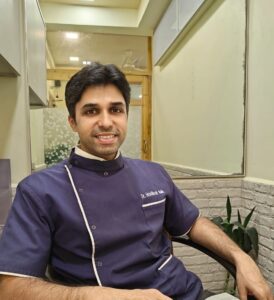

If bonding is enough, that's what's suggested — not a bigger treatment.
Both dentists are MDS Prosthodontics, trained in matching restorations to natural teeth.
Step-free walk-in access, Guru Nanak Road, Mahim West — no stairs.
Same Guru Nanak Road address, next to Citylight Cinema, for over a decade.
Published reviews on anterior composite restorations report median survival roughly in the range of 6 to 11 years, depending on how failure is measured and how the tooth is used afterward.
Usually not — little to no enamel is removed, so anaesthesia typically isn't needed. Any brief sensitivity afterward is uncommon and mild.
Yes — shade matching is done before any resin is applied, and the material is polished to match the surrounding tooth's texture and sheen.
Composite resin is more porous than porcelain and can stain over time from tea, coffee, or tobacco, more so than a veneer would.
The same composite material is used for both, but bonding is applied cosmetically to a visible surface, while a filling restores a tooth after decay is removed.
Small gaps often can be closed with bonding. Larger gaps or ones related to tooth position may need orthodontic treatment or veneers instead.
Usually one. It's completed and polished in a single appointment, unlike veneers which need a lab turnaround.
It can usually be repaired or touched up directly, without needing to replace the entire repair, depending on the extent of the damage.
Call or WhatsApp PlanDental to check today's availability, ask a question, or send a photo for a personalised estimate — no forms to fill.
Dr. Hrishikesh Naik · Dr. Nisha Naik · About the clinic · Cosmetic Dentist in Mahim
General background reading on the clinical claims made on this page (not clinic-specific research):
Disclaimer: Information provided on this page is for educational purposes only. Individual treatment plans and outcomes vary based on clinical evaluation by a qualified dentist.