

Deep cleaning removes tartar and bacterial deposits from below the gum line and smooths the root surface — the specific procedure behind non-surgical periodontal treatment. This page covers exactly what happens, quadrant by quadrant.
At PlanDental in Mahim West, deep cleaning is performed by Dr. Hrishikesh Naik and Dr. Nisha Naik, both MDS in Prosthodontics and Implantology. It's a different, more involved procedure than a standard cleaning — this page explains why. Read more about the clinic before you book.
Patients usually book this for: recommended after a periodontal exam tartar built up below the gum line gums that bled or felt tender at a check-up confirmed periodontitis needing treatment first step before periodontal maintenance

Deep cleaning — clinically called scaling and root planing — at PlanDental in Mahim, Mumbai removes tartar and bacterial deposits from below the gum line, then smooths the exposed root surface so gum tissue can reattach more cleanly. It's done under local anaesthesia, typically one or two quadrants of the mouth per visit, and it's the specific procedure behind periodontal treatment for diagnosed periodontitis.
A routine cleaning removes plaque and tartar above the gum line and just slightly below it. Deep cleaning goes further — down to where tartar has built up along the root surface inside a periodontal pocket, which a standard cleaning instrument can't reach comfortably or thoroughly. Because this area is more sensitive and the deposits are more stubborn, it's done under local anaesthesia and takes considerably longer per section of the mouth.
The "root planing" part specifically smooths the root surface itself, removing rough patches and bacterial toxins embedded in it — this is what actually gives gum tissue the best chance to reattach to the tooth rather than staying pulled away.
Once tartar has been sitting along a root surface inside a pocket, bacterial toxins bind to the roughened root itself, not just the visible deposit. Removing the tartar alone can leave that toxin-laden layer behind, which keeps irritating the gum tissue even after the visible buildup is gone. Smoothing the root removes this layer, giving inflamed tissue a genuinely clean surface to heal against.
Clinical guidelines from bodies such as the American Academy of Periodontology describe scaling and root planing as the standard first-line treatment for periodontitis before considering any surgical option — which is why it's the procedure this site's periodontal and gum disease pages point to.
Full scaling and root planing, by quadrant, with numbing for comfort.
Above-gumline cleaning for routine maintenance, no anaesthesia needed.
How many quadrants are done in one sitting depends on severity and comfort.
The quadrant being treated is numbed with local anaesthesia before any instrumentation begins.
Tartar and bacterial deposits are removed from below the gum line using hand and ultrasonic instruments.
The root surface is smoothed to remove embedded toxins and give gum tissue a clean surface to heal against.
The area is rinsed and checked before moving to the next quadrant, either the same visit or a following one.
Pockets are remeasured to see how the tissue has responded and whether periodontal maintenance can begin.
Deep cleaning cost in Mumbai is usually calculated per quadrant, since the time and instrumentation needed scales with how many parts of the mouth are affected. PlanDental doesn't publish a fixed figure here — call or WhatsApp and the clinic will talk you through it after the exam.
This section describes what affects cost, not a quotation. Actual cost is confirmed only after an exam.
If your pocket depths weren't shared with you, it's fair to ask for the numbers before agreeing to treatment. Send your exam notes on WhatsApp for a straight opinion.
Mild tenderness and root sensitivity to hot or cold are common as numbness wears off.
A soft diet and gentle brushing around the treated area help while gums start to tighten.
Sensitivity gradually eases as gum tissue reattaches to the smoothed root surface.
Follow-up visit remeasures pockets to confirm the response and plan next steps.
An active abscess or acute infection is addressed first — deep cleaning around untreated acute infection isn't appropriate.
Heavily calcified, long-standing deposits across all four quadrants are usually staged over two visits rather than done in one sitting.
Pockets that don't improve at the 4–6 week follow-up may need referral for periodontal surgery rather than repeated deep cleaning.
Normal pocket depths with no tartar below the gum line don't need this procedure — a regular cleaning is more appropriate.
Expect numbing first, then a longer, more thorough cleaning than a routine visit — often 45 minutes to an hour per quadrant depending on how much tartar is present. It's normal to feel some pressure and vibration from the instruments, but not sharp pain, since the area is numbed beforehand. If all four quadrants need treatment, this is usually split across two visits rather than done in one long sitting.
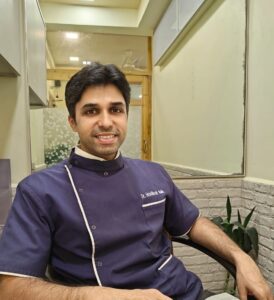

Numbers behind the recommendation are explained, not just stated.
Quadrants staged across visits when that's the more comfortable option.
Step-free walk-in access, Guru Nanak Road, Mahim West — no stairs.
Same Guru Nanak Road address, next to Citylight Cinema, for over a decade.
The procedure itself is done under local anaesthesia, so it shouldn't be painful during the appointment. Mild tenderness and sensitivity afterward, once the numbness wears off, are common.
A regular cleaning addresses plaque and tartar above and just below the gum line, without anaesthesia. Deep cleaning removes deposits from deeper inside a periodontal pocket and smooths the root surface, and needs numbing because of the depth involved.
Often one or two visits, depending on how many quadrants need treatment and how comfortable it is to numb multiple areas in one sitting.
Some teeth may feel slightly different temporarily once built-up tartar that was filling the space is removed — this is a normal, temporary sensation, not a sign of a problem.
Root sensitivity to hot or cold typically eases over two to four weeks as the gum tissue reattaches to the smoothed root surface.
Yes, if it's indicated — periodontal pocket buildup and bone loss usually don't cause pain in the early stages, which is exactly why it's found through measurement and X-rays, not by symptoms alone.
A follow-up visit at four to six weeks remeasures pocket depths to confirm the tissue has responded, before deciding on a periodontal maintenance schedule.
Yes — "deep cleaning" is the everyday term for the clinical procedure called scaling and root planing.
1. American Academy of Periodontology / American Dental Association — Clinical Practice Guideline on the nonsurgical treatment of chronic periodontitis by means of scaling and root planing, Journal of the American Dental Association. jada.ada.org
2. Cobb CM — "Clinical significance of non-surgical periodontal therapy: an evidence-based perspective of scaling and root planing," Journal of Clinical Periodontology, indexed on PubMed. pubmed.ncbi.nlm.nih.gov
Call or WhatsApp PlanDental to check today's availability or ask a question — no forms to fill.
Disclaimer: Information provided on this page is for educational purposes only. Individual treatment plans and outcomes vary based on clinical evaluation by a qualified dentist.