

A smile makeover goes furthest when it starts with a plan, not a drill. Smile designing is the consultation that maps out exactly which changes — tooth shape, shade, gum line — will get you there, before any treatment begins.
At PlanDental in Mahim West, smile design consultations are led by Dr. Hrishikesh Naik, MDS in Prosthodontics and Implantology, with Dr. Nisha Naik also MDS Prosthodontics. Full-mouth colour and shape matching is core to prosthodontic training, which is why this clinic treats planning as its own step rather than folding it into whichever treatment a patient asks for first. Read more about the clinic before you book.
Patients usually book this when they're: unsure which treatment they actually need dealing with more than one concern (colour, shape, gaps) planning ahead for a wedding or event wanting to see the plan before committing seeking a second opinion on a proposed plan

Smile designing at PlanDental in Mahim, Mumbai is a planning consultation, not a treatment on its own. The dentist examines tooth shape, shade, gum line and how your smile sits with your face, takes photographs, and maps out which combination of treatments — whitening, veneers, bonding, gum contouring, or orthodontics — addresses your specific concerns, and in what order. You leave with a written plan; each treatment in it is then booked and carried out as its own visit.
The two terms get used interchangeably, but they aren't the same thing. Smile designing is the diagnostic and planning stage — assessing tooth shape, shade, proportion, gum line and how they work with your lips and face, then deciding which treatments would help and in what sequence. Nothing is treated during this visit.
A smile makeover is the execution of that plan — the actual whitening, veneers, bonding, or gum contouring carried out over one or more visits. Skipping straight to a makeover without designing it first is how patients end up with a whitened tooth that doesn't match an old crown, or veneers that fix shape but ignore an uneven gum line.
A short chairside conversation and photo review decides which column below applies to you.
Colour, shape, alignment and gum line all interact. Whiten teeth before fitting a veneer and the veneer is made to match a shade that then fades unevenly against it. Reshape one front tooth without checking symmetry against its pair and the smile looks fixed on one side only. Treating each concern in isolation is the most common reason cosmetic work needs to be redone.
This is also where a prosthodontist's training is directly relevant: prosthodontics is the specialty concerned with restoring and matching teeth across a whole mouth, not a single tooth in isolation, which is exactly the skill a smile plan draws on.
Smile planning can be done at a few levels of detail. Here's how they compare, and which this clinic currently offers.
Clinical photos, shade guide, and a face-to-face discussion of the plan.
Computer-simulated preview overlaid on your own photos.
A lab-made model previewing the proposed tooth shapes.
You describe what bothers you about your smile and what you'd like to change — the plan starts from your priorities, not a fixed package.
Front and profile photos plus a shade-guide reading give an objective starting point to plan and measure progress against.
Decay, gum health, bite, and any existing crowns or fillings are checked before any cosmetic plan is finalized.
The dentist maps which treatments address which concerns, and the order they need to happen in — cleaning before whitening, whitening before veneers, and so on.
You leave with the plan in writing. Each stage is then booked separately, at your pace.
The design consultation itself is usually the smaller cost; the bulk of any smile-makeover budget sits in whichever treatments the plan recommends. PlanDental doesn't publish a fixed figure here, since the right number depends entirely on how many concerns are being planned for and how many treatments the plan eventually includes — WhatsApp a photo of your smile and the clinic will talk you through what a consultation covers.
This section describes what affects cost, not a quotation. Actual cost is confirmed only after the plan itself is finalized.
If another clinic has proposed a plan — a set of veneers, a full makeover, a specific sequence — it's worth a second look before committing. Send a photo and a summary of what's been proposed on WhatsApp for a straight opinion.
You leave with a written plan and sequence — nothing has been treated yet.
Any lab or material choices for recommended treatments are finalised if needed.
Prep work like scaling or a filling is completed first if the plan calls for it.
The plan can be revisited if your priorities or budget change between stages.
A single, well-defined concern — like one chipped front tooth — usually doesn't need a full planning visit; it's assessed and treated directly instead.
Active decay or unmanaged gum disease — these are treated first, before any cosmetic plan is finalised.
Reference photos of a smile that doesn't suit your jaw, bite, or facial proportions — the plan is adjusted to what's actually achievable for your mouth, not a copied look.
Wanting to skip the exam and go straight to a specific treatment — a basic check happens regardless, since treating around undiagnosed decay or gum disease is how results fail early.
You'll sit in a standard operatory, not a separate studio. Most of the visit is conversation and photos — the dentist asks what bothers you, looks at your teeth and gums, takes a few pictures, and talks through what's realistic. There's no drilling, no injection, and no discomfort involved at any point. You leave with a plan on paper, not a treated tooth.
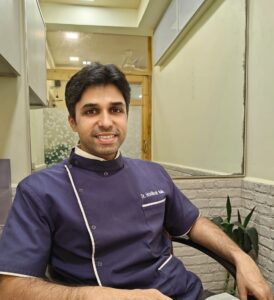

No cosmetic treatment is started until a plan is agreed with you.
Both dentists are MDS Prosthodontics, trained in full-mouth colour and shape matching.
Step-free walk-in access, Guru Nanak Road, Mahim West — no stairs.
Same Guru Nanak Road address, next to Citylight Cinema, for over a decade.
It's a consultation and planning visit. No whitening, veneers, or other treatment happens during a design visit — it results in a written plan that's carried out separately.
Designing is the planning stage; a makeover is the treatment stage that follows it. Many patients use the terms interchangeably, but they're two different visits.
You'll get a clear, discussed plan with photos of your current smile as the reference point. A rendered digital or physical preview isn't confirmed as a standard part of this clinic's process — ask about it specifically if you want one.
Usually 30 to 45 minutes for photos, a shade check, and discussion of the plan.
No. The plan is a roadmap, not a commitment — you can choose to do all, some, or none of the recommended treatments, and at your own pace.
A single, well-defined issue like one chipped tooth usually doesn't need a full design visit — it can be assessed and treated directly instead.
The plan is discussed with you, not handed over as a fixed prescription — you can ask for alternatives or a different sequence before booking anything.
No. It involves photos, a shade guide, and a conversation — no drilling or injections are part of this visit.
Call or WhatsApp PlanDental to check today's availability or ask a question — no forms to fill.
Dr. Hrishikesh Naik · Dr. Nisha Naik · About the clinic · Cosmetic Dentist in Mahim
Disclaimer: Information provided on this page is for educational purposes only. Individual treatment plans and outcomes vary based on clinical evaluation by a qualified dentist.