

A filling removes decay and restores a tooth in a single visit — the standard treatment for a cavity caught before it reaches the nerve, using a tooth-coloured material that blends naturally with the surrounding tooth.
At PlanDental in Mahim West, fillings are placed by Dr. Hrishikesh Naik and Dr. Nisha Naik, both MDS in Prosthodontics and Implantology. Read more about the clinic before you book.
Patients usually book this for: a cavity found at a check-up mild sensitivity to sweet or cold a small chip or fracture an old filling that's worn or cracked visible dark spots on a tooth
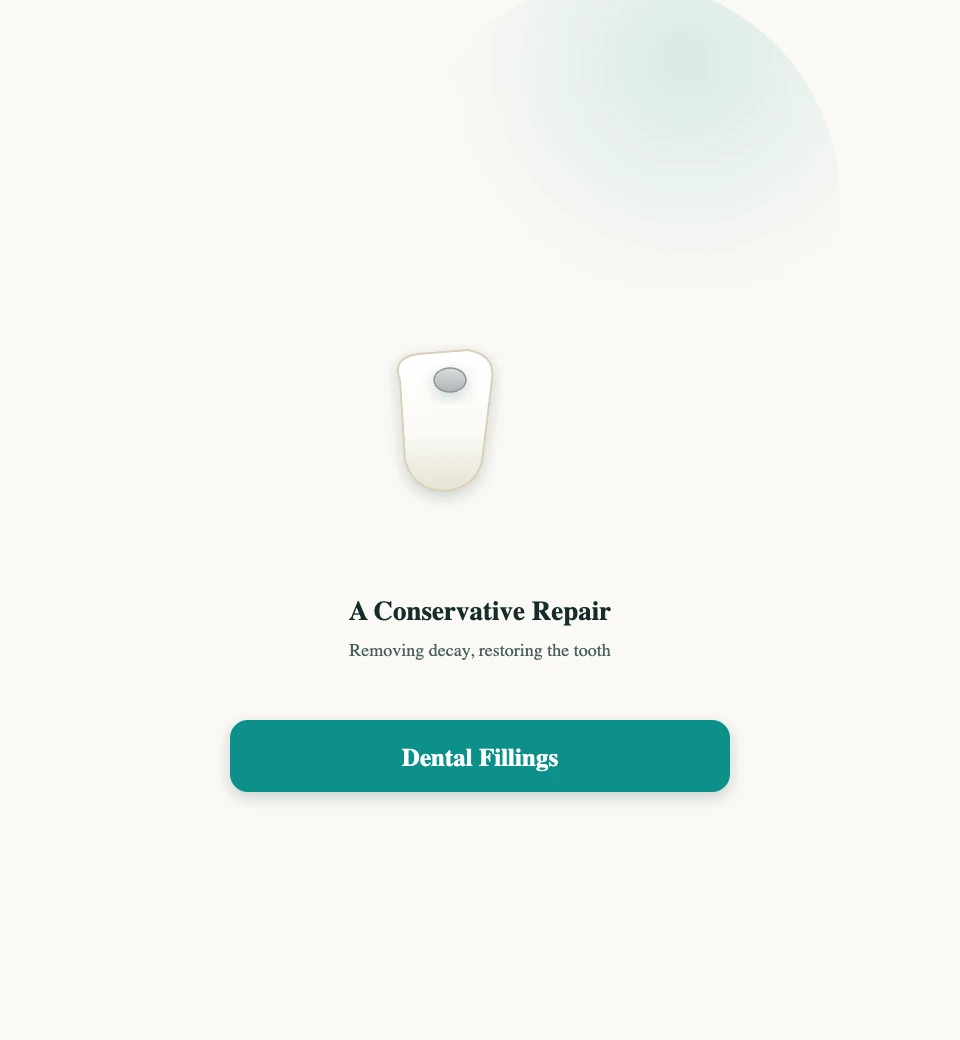
Dental fillings at PlanDental in Mahim, Mumbai remove decay from a tooth and restore its shape and function with a tooth-coloured composite material, in a single visit for most cases. Fillings are the right treatment for a cavity that hasn't yet reached the nerve — once decay reaches that deep, root canal treatment becomes necessary instead.
When decay creates a cavity in a tooth, the affected, softened tooth structure needs to be removed before it can spread further. A filling restores the space left behind, sealing it against bacteria and restoring the tooth's original shape and chewing function. Today's fillings are most commonly made of a tooth-coloured composite resin, which bonds directly to the tooth and blends in closely with the surrounding enamel.
Bonds directly to the tooth and blends with natural enamel.
Covers the whole tooth when too much structure is lost for a filling.
Needed once decay has reached the nerve tissue.
The tooth and surrounding area are numbed for comfort.
The softened, decayed tooth structure is carefully removed.
The cavity is cleaned and prepared for the filling material to bond to it.
The composite material is layered in, shaped, and set with a curing light.
The filling is polished and your bite is checked for a comfortable fit.
Dental filling cost in Mumbai depends on the size of the cavity and how many surfaces of the tooth are involved. PlanDental doesn't publish a fixed figure here — call or WhatsApp and the clinic will talk you through it after the exam.
This section describes what affects cost, not a quotation. Actual cost is confirmed only after an exam.
Many cavities are treatable with a straightforward filling — a crown isn't always necessary. Send your X-ray or exam notes on WhatsApp for a straight opinion.
Numbness wears off; avoid chewing on that side until sensation fully returns.
Mild sensitivity to hot, cold, or pressure is common and usually settles.
Normal eating and brushing resume as usual.
The filling is checked for wear at routine check-ups.
A filling doesn't treat decay that has already reached the nerve — that needs root canal treatment.
A very large cavity leaves too little tooth structure for a filling to reliably hold — a crown protects the tooth better in that case.
Fillings don't prevent new decay elsewhere — ongoing brushing, flossing, and check-ups still matter.
The area is numbed first, so you shouldn't feel pain during the procedure — some pressure and vibration from the instruments is normal. The whole visit typically takes 30 to 45 minutes, and you can eat normally again once the numbness has fully worn off, usually within a few hours.


A filling is used whenever the case genuinely allows for it, not skipped in favour of bigger work.
Every filling is checked and adjusted so it feels comfortable, not high.
Step-free walk-in access, Guru Nanak Road, Mahim West — no stairs.
Same Guru Nanak Road address, next to Citylight Cinema, for over a decade.
No — the area is numbed beforehand, so you shouldn't feel pain during the procedure. Mild sensitivity for a day or two afterward is normal.
Composite fillings hold up well for many years with good oral hygiene, though they're checked at routine check-ups for wear and replaced if needed.
Yes — composite filling material is shade-matched to your natural tooth colour and blends in closely.
It depends on how much healthy tooth structure remains after the decay is removed — this is confirmed at your exam, not by the cavity's appearance alone.
Over time, fillings can wear, chip, or loosen, especially older ones — this is why they're checked periodically and replaced when needed.
Yes, for the vast majority of cavities — the whole process, from numbing to a finished, polished filling, is typically completed in a single appointment.
Call or WhatsApp PlanDental to check today's availability or ask a question — no forms to fill.
Disclaimer: Information provided on this page is for educational purposes only. Individual treatment plans and outcomes vary based on clinical evaluation by a qualified dentist.