

A gap between teeth, called a diastema, most often shows up between the two upper front teeth — and depending on its cause, it can be closed with something as simple as bonding or may need orthodontic movement first.
At PlanDental in Mahim West, gaps between teeth are assessed by Dr. Hrishikesh Naik and Dr. Nisha Naik, both MDS in Prosthodontics and Implantology. Read more about the clinic before you book.
People search this for: a visible gap between front teeth spacing that's always been there a gap that's widened over time a gap after losing a tooth wanting a closer, more even smile
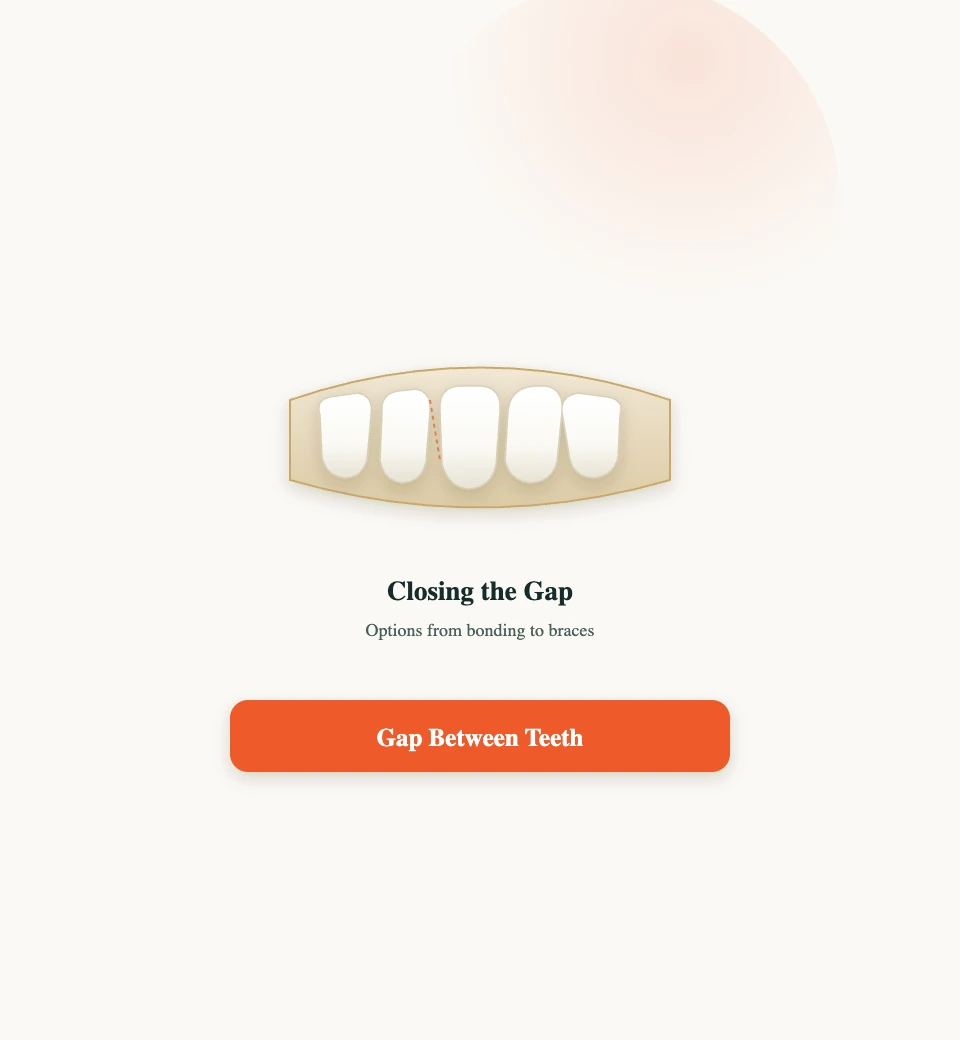
A gap between teeth (a diastema) at PlanDental in Mahim, Mumbai is assessed by its size and cause — a small, stable gap between the front teeth is often closed directly with dental bonding or veneers, while a larger gap, or one caused by tooth-jaw size mismatch, usually needs orthodontic movement first before any cosmetic finishing touch.
A diastema most commonly shows up between the two upper front teeth, and can be present from childhood or develop later. It happens when there's more space in the jaw than the teeth need to fill it — sometimes because the teeth are naturally smaller relative to the jaw, sometimes because a tooth is missing, and sometimes because of a habit or tissue structure that keeps the front teeth apart.
Teeth naturally smaller than the available jaw space leave room between them.
The tissue connecting the lip to the gum can sometimes sit between the front teeth, keeping them apart.
Space left by a missing tooth can show up as a visible gap nearby.
Repeated pressure from the tongue against the front teeth can gradually widen a gap.
Advanced bone loss can let front teeth drift apart in adulthood.
Many small, stable gaps between front teeth can be closed directly with bonding or veneers, without orthodontic treatment. Send a photo or exam notes on WhatsApp for a straight opinion.
An active tongue thrust habit or oversized frenum contributing to the gap may need to be addressed for a closed gap to stay closed.
Larger gaps, or several gaps at once, usually aren't suitable for bonding alone and need orthodontic movement first.
Active gum disease is treated first — closing a gap around inflamed, unhealthy gum tissue isn't appropriate.


Bonding isn't offered by default without checking why the gap exists.
Simple gaps get simple fixes; larger ones are referred appropriately.
Step-free walk-in access, Guru Nanak Road, Mahim West — no stairs.
Same Guru Nanak Road address, next to Citylight Cinema, for over a decade.
It's called a diastema, and it most commonly appears between the two upper front teeth.
Yes, for many small, stable gaps — dental bonding or veneers can close them directly in a single visit, without needing to move the teeth.
A widening gap in adulthood can be linked to gum disease and bone loss, or to an ongoing habit like tongue thrust — worth checking rather than assuming it's just natural.
It holds up well for most people, though an untreated underlying cause, like an active tongue thrust habit, can affect how long the result lasts.
No — it depends on the size of the gap and its cause. Larger gaps or ones from tooth-jaw size mismatch usually do need orthodontic movement, but many smaller gaps don't.
Not necessarily — many people have a stable, lifelong gap with no underlying issue. It's the newly developing or widening gaps that are worth investigating.
Call or WhatsApp PlanDental to check today's availability or ask a question — no forms to fill.
Dr. Hrishikesh Naik · Dr. Nisha Naik · About the clinic · Dental Concerns Guide
Disclaimer: Information provided on this page is for educational purposes only. Individual treatment plans and outcomes vary based on clinical evaluation by a qualified dentist.