

Ceramic braces work the same way as metal braces, but use tooth-colored or clear brackets that blend in with your teeth — a less visible option for patients who still want a fixed appliance.
At PlanDental in Mahim West, the initial evaluation and dental health monitoring during treatment are provided by Dr. Hrishikesh Naik and Dr. Nisha Naik, both MDS in Prosthodontics and Implantology. Fitting and adjusting the braces themselves is coordinated with an orthodontist. Read more about the clinic before you book.
Patients usually book this for: wanting a less visible fixed option crowded or crooked teeth comparing ceramic vs metal braces adults and teenagers
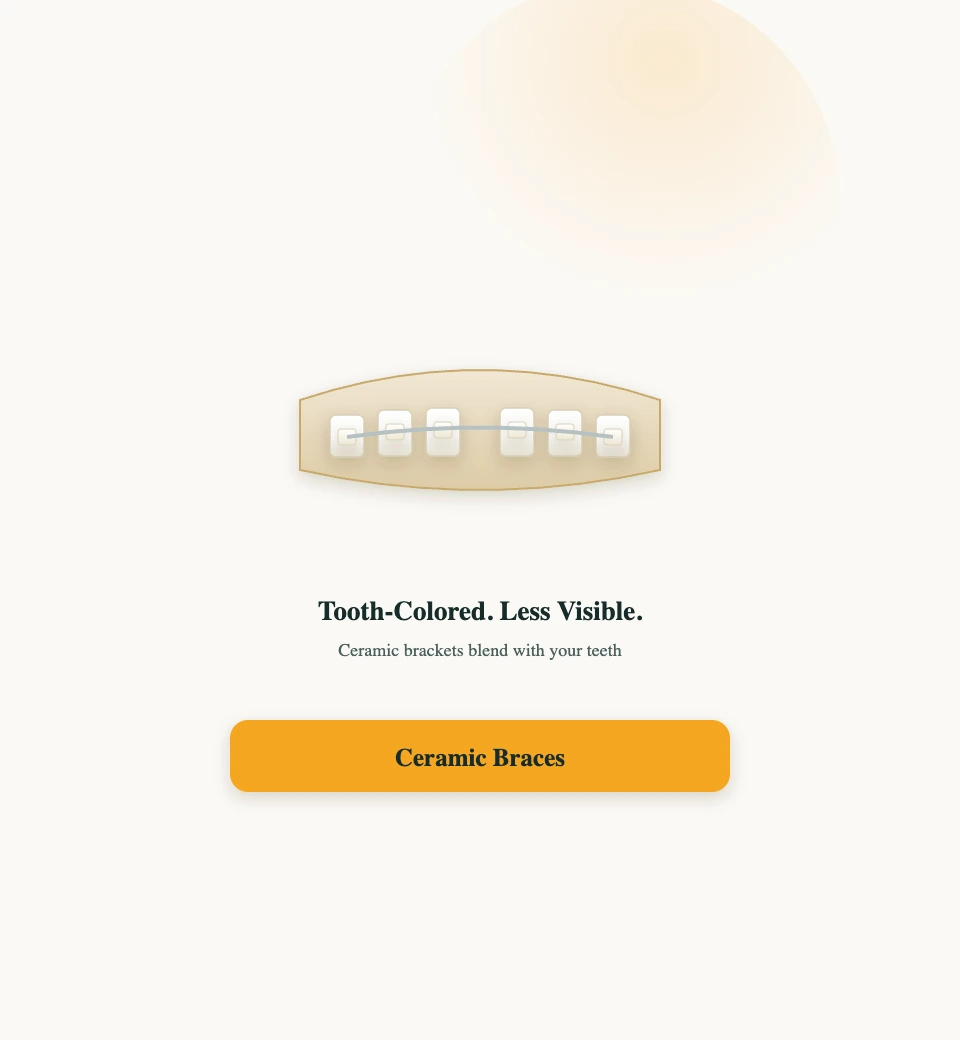
Ceramic braces use tooth-colored or clear brackets in place of metal ones, making them noticeably less visible while working on the same bracket-and-archwire principle. The ceramic material itself resists staining well, though the small elastic ties that hold the wire in each bracket can pick up color from food and drink between adjustment visits — a normal, manageable part of wearing them, not a flaw in the braces.
Ceramic braces are fitted, adjusted, and function in essentially the same way as metal braces — the main difference is the bracket material. Because ceramic brackets are less noticeable against the teeth, many patients choose them specifically for the cosmetic advantage during treatment, while still getting the reliability of a fixed appliance. Ceramic brackets are also more brittle than stainless steel, so they're a little more prone to chipping or fracture under heavy biting forces.
Tooth-colored, less visible than metal.
Most affordable, handles wide case range.
Bonded behind the teeth, hidden from the front.
PlanDental assesses your teeth, bite, and gum health, and takes any needed records.
Your case is discussed with a coordinating orthodontist, who plans the bracket positions and wire sequence.
Ceramic brackets are bonded to each tooth, with elastic ties refreshed at periodic adjustment visits.
A retainer holds the new position in place once active treatment ends.
Ceramic braces generally cost more than metal braces due to the bracket material, though exact cost still depends on case complexity and treatment duration. PlanDental doesn't publish a fixed figure here — call or WhatsApp for a referral and the coordinating orthodontist will confirm cost after assessment.
This section describes what affects cost, not a quotation. Actual cost is confirmed by the treating orthodontist.
Send a photo of your smile and your priorities (visibility, budget, timeline) on WhatsApp for guidance on which fits your case.
Mild soreness after bonding and after each adjustment is common.
Elastic ties can pick up color from tea, coffee, or curry — normal, and refreshed at each visit.
Brackets are removed and a retainer is fitted.
Consistent retainer wear helps prevent teeth drifting back.
Ceramic brackets are more prone to chipping or fracture than stainless steel, especially under heavy biting forces.
Elastic ties can discolor between visits from strongly pigmented foods and drinks.
Generally costs more than metal braces for a similar treatment course.


Evaluation and monitoring here; bracket work coordinated with an orthodontist.
Staining and fragility factors explained clearly, not glossed over.
Step-free walk-in access, Guru Nanak Road, Mahim West — no stairs.
Same Guru Nanak Road address, next to Citylight Cinema, for over a decade.
The ceramic brackets themselves resist staining well. The small elastic ties holding the wire can pick up color from tea, coffee, or curry between visits — a normal part of wearing them, and they're refreshed at each adjustment.
Ceramic brackets are more brittle than stainless steel and slightly more prone to chipping under heavy biting forces, though they're still a well-established, effective option for most cases.
Ceramic braces generally cost more than metal, mainly due to the bracket material — exact cost is confirmed by the treating orthodontist after assessment.
Largely yes, though very heavy grinding or forceful bites may be discussed with your orthodontist given the bracket's greater fragility.
Similar to metal braces — it varies by case complexity, typically spanning many months up to around two years.
PlanDental provides the initial evaluation and ongoing dental health monitoring during treatment. Fitting and adjusting the braces is coordinated with an orthodontist.
1. Overview of ceramic bracket material properties, staining resistance, and elastic ligature discoloration — orthodontic clinical literature (JCO Online). jco-online.com
Call or WhatsApp PlanDental to check today's availability or ask a question — no forms to fill.
Disclaimer: Information provided on this page is for educational purposes only. Individual treatment plans and outcomes vary based on clinical evaluation by a qualified dentist or orthodontist.