

A chipped edge, a stubborn grey tooth that never bleached out, a gap that's bothered you for years — veneers cover the front surface of a tooth to change its shape and shade, without the tooth needing a crown.
At PlanDental in Mahim West, veneers are placed by Dr. Hrishikesh Naik, MDS in Prosthodontics and Implantology, whose listed services include smile makeovers with laminates and veneers, with Dr. Nisha Naik also MDS Prosthodontics. Shade- and shape-matching veneers to the teeth around them is core prosthodontic work, not a side skill. Read more about the clinic before you book.
Patients usually book this for: a chipped or worn front tooth grey or intrinsically stained teeth that won't whiten small gaps between front teeth slightly uneven tooth shapes old, discoloured veneers or bonding
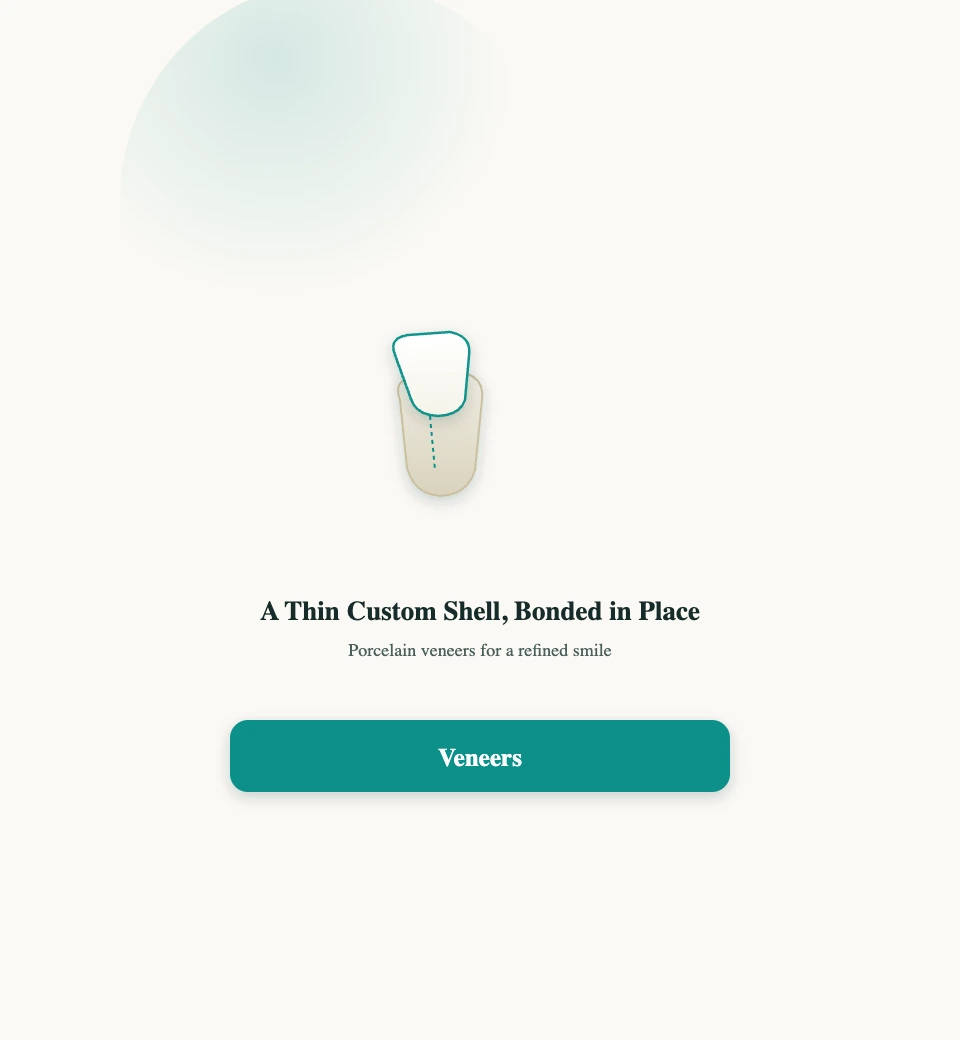
Veneers at PlanDental in Mahim, Mumbai are thin shells — usually porcelain — bonded to the front surface of a tooth to change its shape, close small gaps, or cover discolouration that whitening can't reach. A thin layer of enamel is prepared, an impression or scan is taken, a lab fabricates the veneer over roughly one to two weeks, and it's bonded in place at a final visit. It's a different, more conservative option than a crown, which covers the whole tooth rather than just its front surface.
A veneer covers only the visible front surface of a tooth — it's a thin shell, roughly the thickness of a contact lens for porcelain versions, bonded over the existing tooth structure. A crown covers the entire tooth, front, back, and biting surface, and is used when a tooth has lost significant structure to decay, a root canal, or a large old filling.
Veneers exist for cosmetic correction on a tooth that's structurally sound — shape, minor gaps, or colour that won't respond to whitening. If a tooth is already heavily filled or structurally compromised, a crown is usually the more appropriate option, not a veneer.
A clinical exam and X-ray, where needed, confirm which column below applies to you.
Whitening lightens the natural pigment inside enamel. It doesn't work on intrinsic discolouration caused by a root-canal-treated tooth going grey, childhood tetracycline staining, or old dark fillings visible through thin enamel — the pigment sits too deep or the tooth surface itself is compromised. A veneer solves this differently: it doesn't bleach the tooth, it covers it with a new, shade-matched surface.
The same logic applies to shape. Whitening can't close a gap or reshape a worn edge — a veneer (or bonding, for smaller corrections) physically rebuilds the surface to the shape needed.
A few materials and approaches exist. Here's how they compare, and what this clinic offers.
Lab-fabricated shells, stain-resistant, matched to your natural shade.
Chairside resin sculpted directly onto the tooth, no lab involved.
Moves teeth into position rather than covering them.
The dentist examines the tooth, discusses the target shape and shade, and confirms a veneer is the right fit rather than bonding or a crown.
A thin layer of enamel is removed under local anaesthesia — just enough to fit the veneer without the tooth looking bulky.
The prepared tooth is recorded and sent to the lab, with a temporary veneer placed in the meantime.
The permanent veneer is made off-site, typically over one to two weeks, matched to the agreed shade.
The final veneer is checked for fit and shade, then permanently bonded to the tooth.
Veneer cost in Mumbai depends on the material chosen, how many teeth are involved, and how complex the shade-matching is against neighbouring teeth. PlanDental doesn't publish a fixed figure here, since it varies too much case to case to be accurate without an exam — WhatsApp a photo of your teeth and the clinic will talk you through what affects the estimate for your case.
This section describes what affects cost, not a quotation. Actual cost is confirmed only after an in-person or photo-based assessment.
Sometimes bonding or whitening solves what looks like a veneer case, and sometimes it genuinely doesn't. Send a photo on WhatsApp for a straight opinion before committing to multiple veneers.
Mild gum tenderness from the preparation is normal and settles quickly.
The bite and bonding margins settle in; avoid biting unusually hard foods directly on the new veneer.
Normal brushing and flossing resumes fully; avoid using the veneered tooth to open packaging or bite nails.
Routine check-ups confirm the bonding margin stays intact; a night guard is recommended if grinding is present.
Significant misalignment or bite problems — these need orthodontic correction, not a cosmetic shell over the surface.
Heavily filled, root-canal-treated, or structurally weak teeth — a crown protects the whole tooth better than a veneer would.
Active decay or gum disease — treated first, since a veneer bonded near untreated disease fails early.
Unmanaged teeth grinding — a veneer placed without addressing grinding first is at real risk of chipping or debonding.
Insufficient healthy enamel to bond to — an alternative like a crown is discussed instead.
The preparation visit involves local anaesthesia and light reshaping of the tooth's front surface — you'll feel pressure, not pain. A temporary veneer is fitted so you're not walking around with a prepared tooth exposed while the lab makes the permanent one. The final fitting visit is shorter: the temporary comes off, the real veneer is checked and adjusted, then bonded — no anaesthesia is usually needed at this stage.
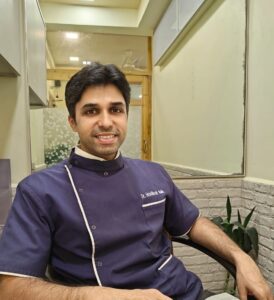

Both dentists are MDS Prosthodontics — shade and shape matching is their core specialty.
If a tooth needs a crown instead, that's what's recommended.
Step-free walk-in access, Guru Nanak Road, Mahim West — no stairs.
Same Guru Nanak Road address, next to Citylight Cinema, for over a decade.
Published data on enamel-bonded porcelain veneers shows survival rates above 90% at 10 years in well-selected cases, though individual results depend on bite forces, habits like grinding, and how the veneer is cared for.
A thin layer of enamel is removed to fit most veneers, which is why candidacy and enamel thickness are checked first. Minimal-preparation approaches exist but aren't confirmed as standard practice at every clinic — ask specifically if this matters to you.
Not fully, in most cases — once enamel is removed to fit a veneer, that tooth generally needs some form of restoration going forward. This is discussed clearly before any preparation begins.
A veneer covers only the front surface of a tooth that's otherwise structurally sound. A crown covers the entire tooth and is used when more structure has been lost.
Porcelain veneers resist staining well due to their glazed surface. The bonding margin at the edge of the veneer can pick up staining over years, which routine cleanings help manage.
A chipped veneer is assessed to see if it can be polished or repaired, or whether it needs replacement — this depends on the size and location of the chip.
A well shade-matched and shaped veneer is designed to be indistinguishable from surrounding teeth, which is why the planning and shade-matching step matters as much as the material itself.
Usually two to three: an initial consultation and preparation visit, and a final fitting visit once the lab has made the veneer, roughly one to two weeks apart.
Call or WhatsApp PlanDental to check today's availability, ask a question, or send a photo for a personalised estimate — no forms to fill.
Dr. Hrishikesh Naik · Dr. Nisha Naik · About the clinic · Cosmetic Dentist in Mahim
General background reading on the clinical claims made on this page (not clinic-specific research):
Disclaimer: Information provided on this page is for educational purposes only. Individual treatment plans and outcomes vary based on clinical evaluation by a qualified dentist.