
Dental implants are a popular and long-lasting solution for replacing missing teeth. If you are considering this treatment, you may feel nervous about what happens during the procedure. The good news is that dental implant treatment is usually completed in planned stages, giving your mouth time to heal properly.
In this step-by-step guide, we explain what to expect during a dental implant procedure and how a trusted plan dental provider can help you feel prepared from consultation to final restoration.
1. Initial Consultation and Dental Examination
The first step is a detailed consultation with your dentist or oral surgeon. During this visit, your dental professional will examine your teeth, gums, jawbone, and overall oral health.
They may take X-rays, 3D scans, or impressions to check whether your jawbone is strong enough to support an implant. Your dentist will also ask about your medical history, current medications, and lifestyle habits such as smoking.
This stage is important because every patient is different. A personalized treatment plan helps ensure the implant is placed safely and correctly.
2. Creating a Personalized Treatment Plan
After the examination, your dentist will create a treatment plan based on your needs. This plan may include the number of implants required, the condition of your jawbone, the type of restoration needed, and the expected timeline.
Some patients only need one implant, while others may need multiple implants or a full-mouth restoration. If you choose a plandental clinic or provider, they may also explain payment options, treatment stages, and aftercare support clearly so you know what to expect.
3. Tooth Extraction, If Needed
If the damaged or decayed tooth is still in place, it may need to be removed before the implant is placed. In some cases, the tooth extraction and implant placement can happen on the same day. In other cases, the area may need time to heal before moving forward.
Your dentist will decide the best approach based on your oral health and bone condition.
4. Bone Grafting, If Required
A strong jawbone is essential for dental implant success. If your jawbone is too thin or weak, your dentist may recommend a bone graft. This procedure adds bone material to the area where the implant will be placed.
Bone grafting may sound intimidating, but it is a common part of implant treatment. Healing can take several weeks or months, depending on your situation. Once the bone is strong enough, the implant procedure can continue.
5. Dental Implant Placement
During the implant placement procedure, your dentist will numb the area with local anesthesia. Sedation may also be available for patients who feel anxious.
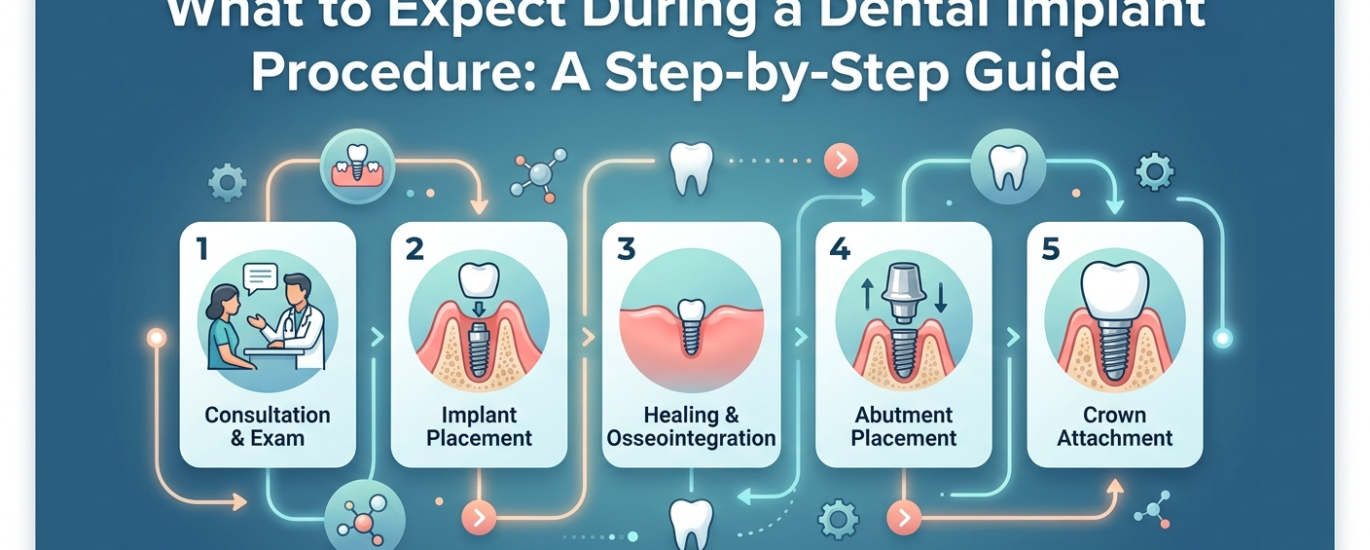
The dentist then makes a small opening in the gum and places a titanium implant post into the jawbone. This post acts like an artificial tooth root. Once the implant is placed, the gum is closed, and the healing process begins.
Most patients are surprised to find that the procedure is more comfortable than expected. Mild swelling, soreness, or bruising may occur afterward, but this usually improves within a few days.
6. Healing and Osseointegration
After the implant is placed, your jawbone needs time to bond with the implant. This process is called osseointegration. It is one of the most important stages because it creates a strong foundation for the replacement tooth.
Healing time varies, but it often takes a few months. During this period, your dentist may provide a temporary tooth or restoration so you can smile and eat more comfortably.
Good oral hygiene, regular checkups, and following your dentist’s instructions are essential during healing.
7. Placing the Abutment
Once the implant has fully bonded with the jawbone, the next step is placing the abutment. The abutment is a small connector that attaches to the implant post and supports the final crown.
Your dentist may need to reopen the gum slightly to attach the abutment. After this step, the gum tissue is allowed to heal around it. In some cases, the abutment may be placed at the same time as the implant.
8. Attaching the Final Crown
The final step is placing the custom-made dental crown. Your dentist will take impressions or digital scans to create a crown that matches the shape, size, and color of your natural teeth.
Once ready, the crown is attached to the abutment. The result is a natural-looking replacement tooth that feels stable and functions much like a real tooth.
9. Aftercare and Long-Term Maintenance
Dental implants can last many years with proper care. After your procedure, your dentist will give you instructions on how to clean around the implant, what foods to avoid during healing, and when to return for follow-up visits.
To protect your implant, brush twice daily, floss carefully, avoid smoking, and visit your dentist regularly. A reliable plandental team can help monitor your implant and support your long-term oral health.
Final Thoughts
Understanding what to expect during a dental implant procedure can make the process feel less overwhelming. From the first consultation to the final crown, each step is designed to restore your smile, improve chewing function, and support your confidence.
If you are missing one or more teeth, speak with a qualified dental professional to find out whether dental implants are right for you. With the right care and planning, dental implants can be a strong, natural-looking, and lasting solution.