
When you have a badly damaged, infected, or painful tooth, your dentist may recommend either a root canal treatment or a dental implant. Both options can restore your smile and oral function, but they work in very different ways. Understanding the difference between dental implants vs. root canal treatment can help you make a confident decision with your dentist.
At Plan Dental, we believe the right choice depends on your tooth condition, bone health, budget, long-term goals, and overall oral health.
What Is Root Canal Treatment?
A root canal is a dental procedure used to save a natural tooth that has become infected or severely damaged inside. During the treatment, the dentist removes the infected pulp, cleans the inside of the tooth, seals it, and usually protects it with a dental crown.
Root canal treatment is often recommended when the tooth structure is still strong enough to support a crown. It allows you to keep your natural tooth while removing pain and infection.
Benefits of Root Canal Treatment
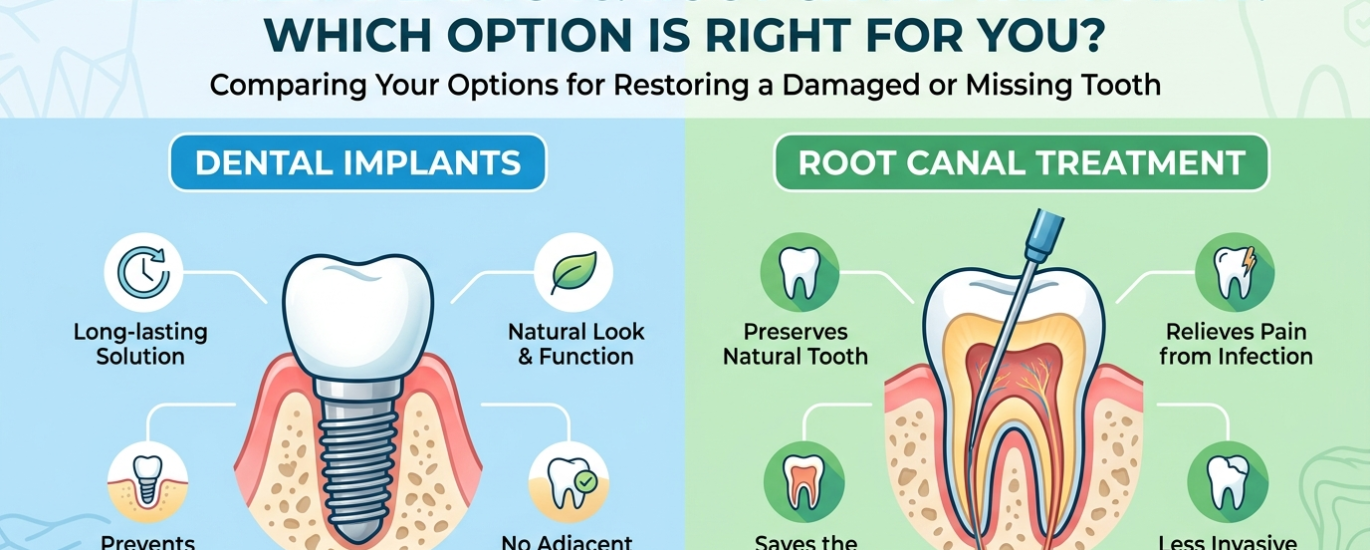
One of the biggest advantages of a root canal is that it saves your natural tooth. Keeping your natural tooth helps maintain normal chewing function and prevents nearby teeth from shifting. It is also usually less invasive than tooth extraction and implant placement.
Root canal treatment may also be more affordable than a dental implant, depending on the complexity of the case and the type of crown needed. Many patients prefer this option when the tooth can still be successfully restored.
What Is a Dental Implant?
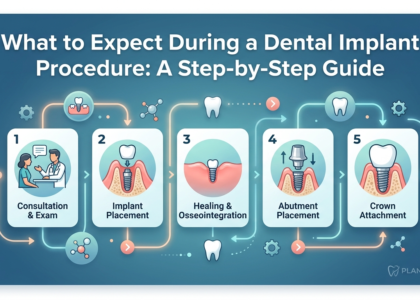
A dental implant is used to replace a missing tooth or a tooth that cannot be saved. The implant is a small titanium post placed into the jawbone, acting like an artificial tooth root. Once it heals, a crown is attached on top to look and function like a natural tooth.
Dental implants are often recommended when a tooth is too damaged, fractured, loose, or infected to be repaired with a root canal.
Benefits of Dental Implants
Dental implants are strong, stable, and long-lasting. They help preserve jawbone health because the implant stimulates the bone like a natural tooth root. They also do not rely on nearby teeth for support.
A dental implant can restore chewing ability, improve appearance, and feel very similar to a natural tooth. With proper care, implants can last many years and are often considered a reliable long-term solution.
Dental Implants vs. Root Canal: Key Differences
The main difference is that a root canal saves your natural tooth, while a dental implant replaces a tooth that has been removed.
A root canal is usually the better option when the tooth can still be repaired. A dental implant may be the better choice when the tooth is too damaged to save. For example, if the tooth has a severe crack below the gumline, advanced bone loss, or repeated infection after previous treatment, extraction and implant placement may be recommended.
Treatment time can also differ. A root canal may be completed in one or two visits, followed by a crown. A dental implant often takes longer because the jawbone needs time to heal around the implant before the final crown is placed.
Which Option Is More Cost-Effective?
Cost depends on your dental condition, location, materials, and whether additional procedures are needed. A root canal with a crown may cost less upfront than an implant. However, if the tooth is weak and later fails, you may still need an implant in the future.
Dental implants may have a higher initial cost, but they can be a strong long-term investment when a tooth cannot be saved. At plandental, patients are encouraged to consider both short-term cost and long-term value before choosing treatment.
Which Option Is Right for You?
A root canal may be right for you if your natural tooth is still strong, the infection can be cleaned, and the tooth can be restored with a crown. It is often the preferred choice when saving the tooth is possible.
A dental implant may be right for you if the tooth is severely damaged, fractured, missing, or unlikely to survive after root canal treatment. Implants are also a good option for patients who want a durable tooth replacement that supports jawbone health.
The best way to decide is through a professional dental exam, X-rays, and a personalized treatment plan. Your dentist will check the condition of the tooth, surrounding bone, gums, and bite before recommending the best solution.
Final Thoughts
When comparing dental implants vs. root canal treatment, there is no single answer for everyone. If your tooth can be saved, root canal treatment may be the most conservative and practical option. If the tooth cannot be restored, a dental implant may provide a strong and natural-looking replacement.
At Plan Dental, the goal is to help patients choose the treatment that protects their oral health, comfort, and smile for years to come. Always consult an experienced dentist before making your final decision.